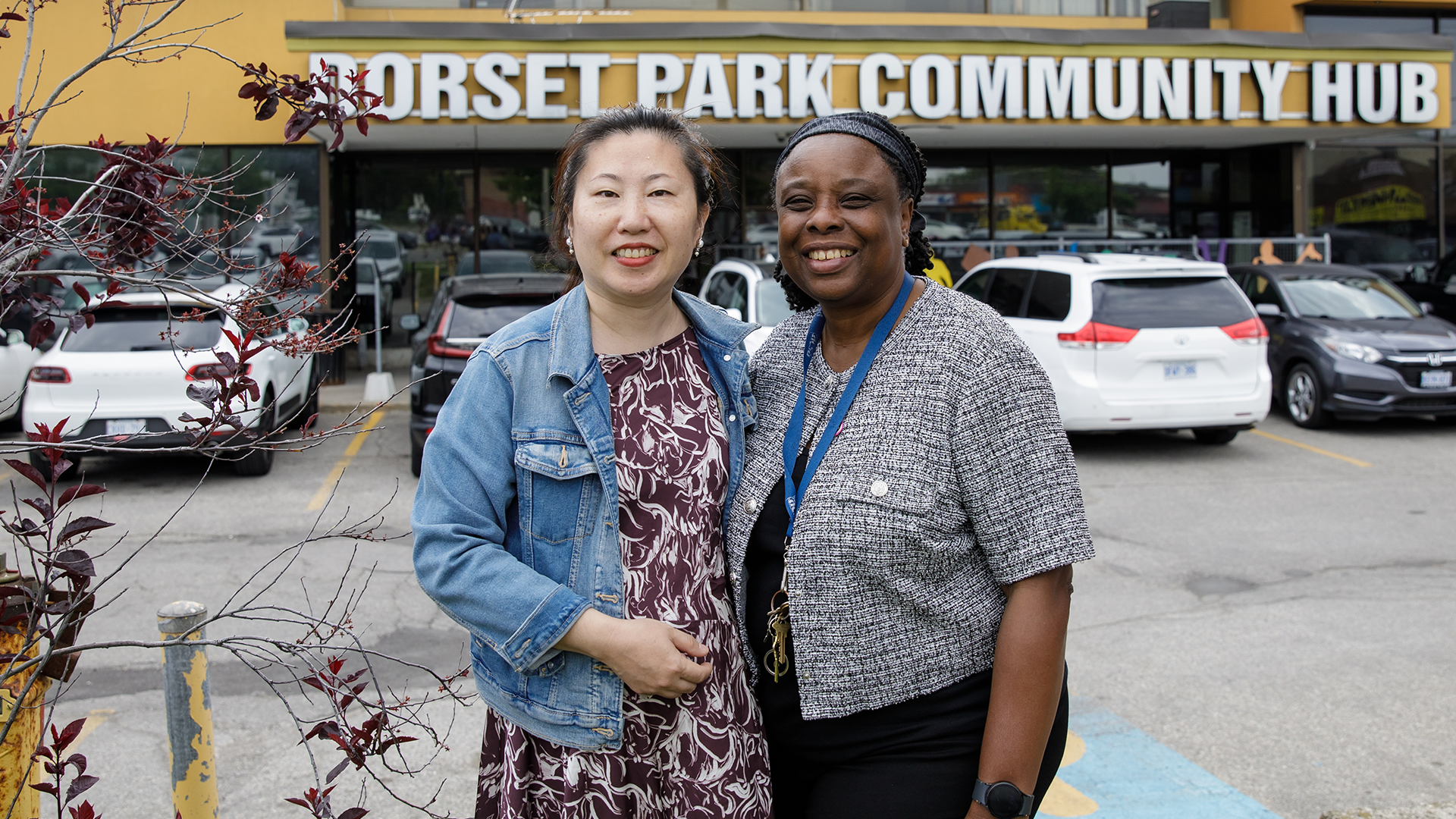
How a neighbourhood Hub is bringing services, connections and opportunities together — all under one roof.
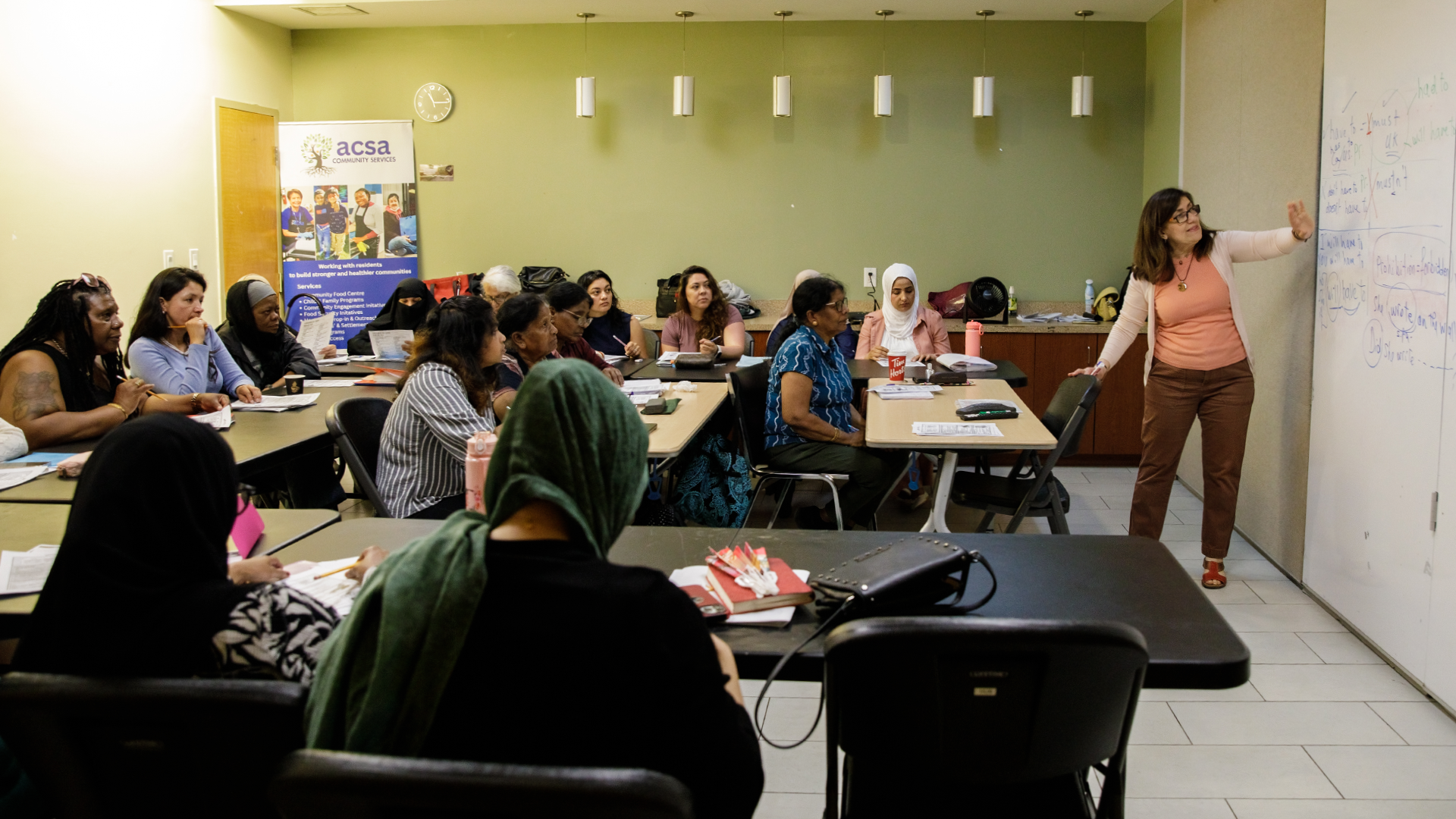
By mid-morning, the halls at the Dorset Park Community Hub are already busy. A senior stops to chat with the receptionist before heading to a program down the hall. In another room, newcomers practice English together while children’s voices drift in from a nearby family program. Someone else has come in looking for help with housing. Before they leave, they also learn where to access food support and legal advice.
At Dorset Park Community Hub, these moments happen every day. Quiet conversations, quick referrals, warm greetings and practical support all unfold under one roof, often at the same time.
For Yvette, Dorset Park’s Community Hub Manager, no two days ever look the same.
“Some days can be dramatic, and some days can be quiet,” she says. Behind the scenes, that can mean everything from navigating conflicts and conversations, connecting residents to resources, supporting volunteers, coordinating programs, or responding to urgent community needs in real time.
It’s busy, unpredictable work — and a reflection of just how much the Hub has become woven into daily life in the neighbourhood.
Support that meets people where they are
Operated by ACSA Community Services, the Dorset Park Community Hub is one of 10 Community Hubs supported by United Way Greater Toronto. Community Hubs bring together social, health, and community services in shared spaces, rooted directly in neighbourhoods. The idea is simple: when organizations and residents work together in one accessible place, people can more easily find the support they need, closer to home. Because access to support shouldn’t depend on knowing where to go — or having the time and resources to get there.
But Hubs are about more than convenience. They are designed to reduce barriers, strengthen relationships and create spaces where people feel connected and supported.
Emily started coming to the Dorset Park Hub 10 years ago to access their EarlyON child and family centre with her first child.
“My home is very close, just across the road,” Emily says. “It was very easy for me to join the programs and get some help.” At the time, she had been feeling isolated at home, so the Hub became part of her routine. Over time, Emily found that the support she got there changed as her needs changed, too.
When her kids started school, a home visitor came to her home to teach her how to help her kids with their homework, as navigating a new school system can be challenging for newcomers. This is one of many Dorset Park Community Hub programs designed to support newcomers adjusting to life in the GTA — common in this part of Scarborough that sees a lot of immigrants and new families.
Emily has been going to the Hub ever since, sometimes multiple times a week. She has accessed everything from yoga and cake decorating classes to legal assistance. She now volunteers at their food bank and works part-time to be a home visitor to teach other parents how to help their kids with their homework, just like the one who taught her all those years ago. Over time, what started as accessing support became something more — a way to contribute back to the community.
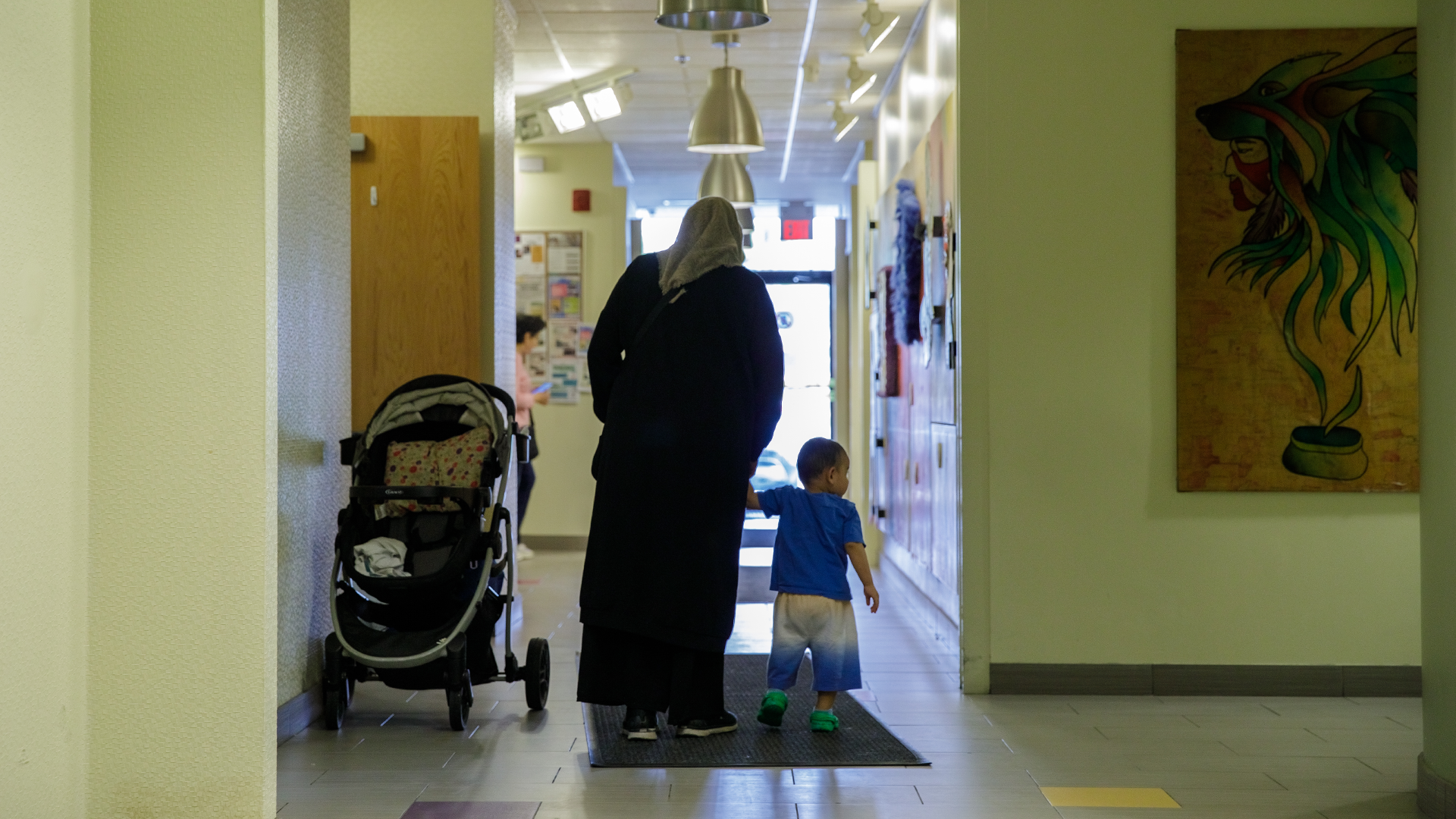
“When I go pick up my kids, I see other parents and I will tell them, ‘Go out and go to the community centre! They have kids’ programs, seniors’ programs. You will find something for yourself,’” Emily says. “Whatever the information is that you need, it is there.”
Inside Dorset Park, that collaboration happens constantly. “People come in for one service, and then as they’re talking, they’re like, ‘Oh, but this is also happening, or I need this,’” says Yvette. “It’s that wraparound support.”
She sees it often with newcomer families. “Women are coming in for the program to learn English, but when they come in, they realize, ‘Oh, there’s also a food centre.’”
That kind of coordination will only become more essential. As the GTA’s population grows over the next decade, expanding and empowering our social services network is at the centre of United Way’s vision for the future. These kinds of connected services are important to meet the growing and ever-evolving needs of our region.
That kind of connection matters in a neighbourhood where many residents are balancing rising costs, affordable housing pressures, and social isolation. Often, these needs are interconnected, so residents don’t have to navigate those challenges alone or travel across the city searching for support.
Why shared community spaces matter
For many people in the neighbourhood, the Hub becomes part of everyday life. “For a lot of the residents, the Hub is more than just the place where people come for programs and services,” says Yvette. “It reduces social isolation for a lot of people because they meet other people like themselves and make new friends.”
“For a lot of the seniors especially, it’s a happy place.”
That sense of belonging is intentional. The physical space itself matters, says Laura, ACSA Community Services Program Director. “When you’re in a vulnerable position and you need support, so much of what helps you feel more in touch with your humanity is having those things — a freshly painted wall or a welcoming space.”
The Dorset Park Community Hub first emerged in response to a clear community need. “It is a community with lots of newcomers, youth, low-income families, single-parent families — people needed support, but there was no infrastructure to bring those supports together,” Laura explains.
“People now see the role of Hubs as going beyond service delivery and see them more as places for opportunity,” she says
That evolution reflects the heart of the Hub model. “Co-locating itself isn’t the only important part of it,” Laura says. “It’s the collaborating.”
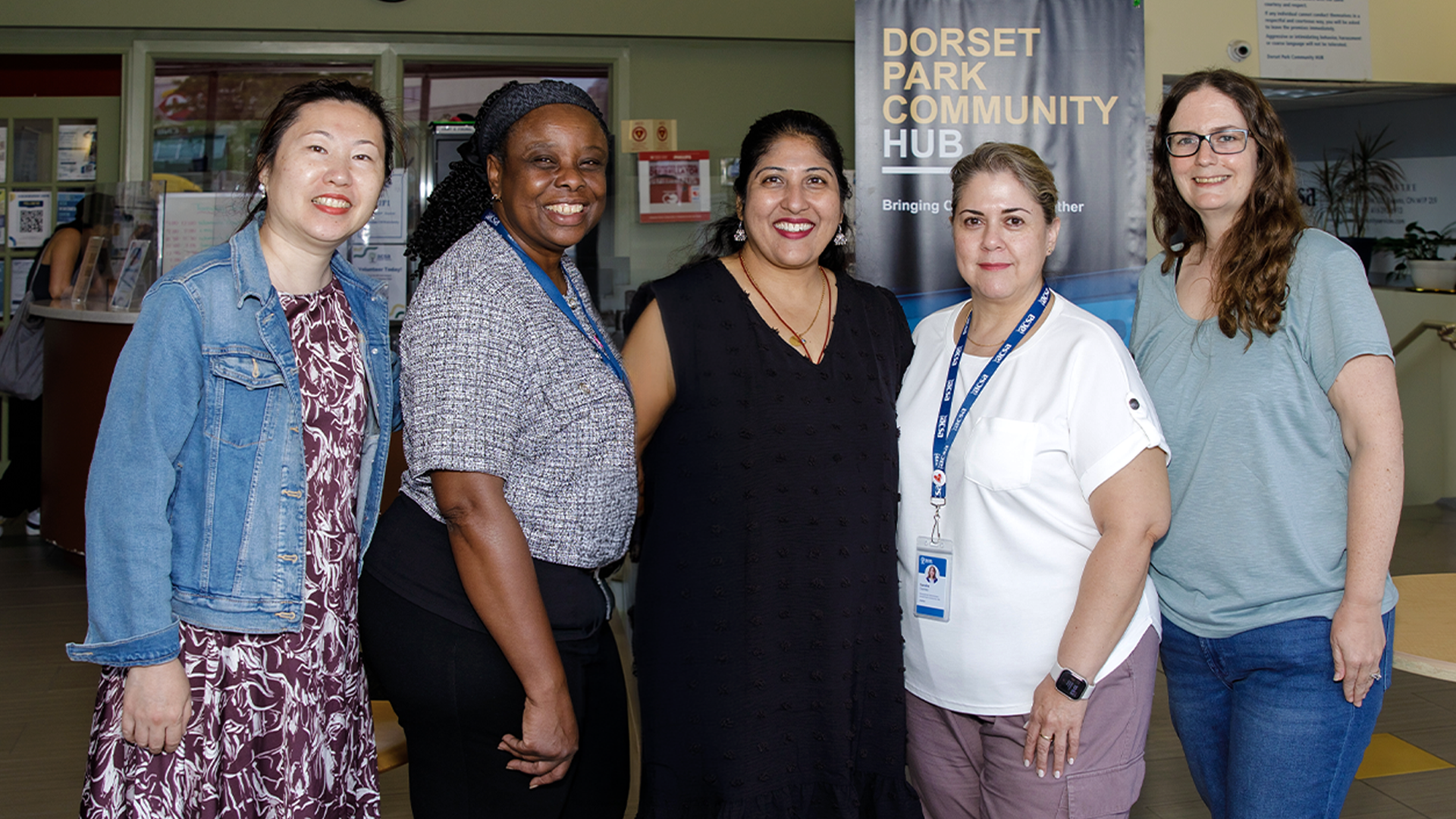
Those collaborations can be formal partnerships between organizations or the quieter, everyday interactions that happen naturally when people share space. “You can’t underestimate the importance of soft referrals and relationship-building,” Laura says.
What happens at the Hub reflects a much larger shift in how community support is being designed. It’s a shift away from siloed services and toward coordinated, community-driven solutions. Here, residents lead programs and volunteer, advocate for neighbourhood improvements and help shape programs that reflect the area’s priorities.
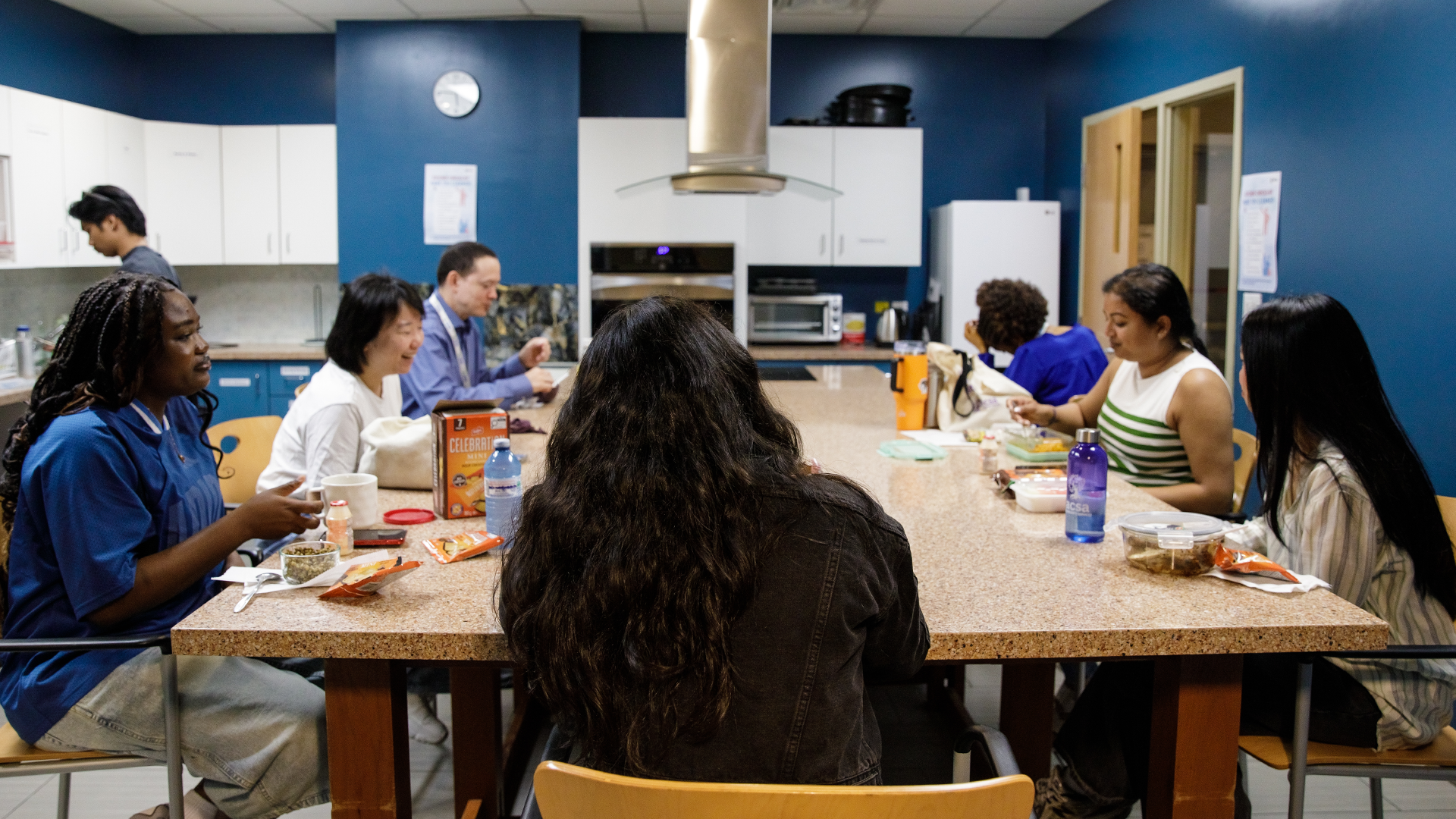
Building the future of community
United Way is working to protect and expand spaces so community organizations can stay rooted — ensuring they are not displaced by rising costs and that residents can continue to access support close to home.
Today, the need for spaces like Dorset Park Community Hub continues to grow. Across the GTA, many community organizations face rising rents and increasing pressure on affordable community space. Without stable places to operate, neighbourhood-based support becomes harder to sustain.
That’s why Community Hubs are a key part of United Way Greater Toronto’s long-term vision for stronger, more connected neighbourhoods. Through our Community Real Estate Initiative, we have a goal of growing to support 10 more Community Hubs over the next decade.
“It’s an opportunity to access services, but it’s also a place to grow and take on leadership roles, whether it’s volunteering or advocating,” says Laura. “The role of residents in how they see themselves and participate at the Hub has evolved, which has been really exciting to see.”
This vision for the future goes beyond just shared space. Hubs are designed as an intentional response to systemic barriers — bringing services, relationships and opportunities together in places where people already live their lives.
“In an ideal world, Hubs would be the place where we’re constantly asking questions, innovating, trying different things and addressing needs at a programmatic level, at a space level, but also at a systems level,” says Laura.
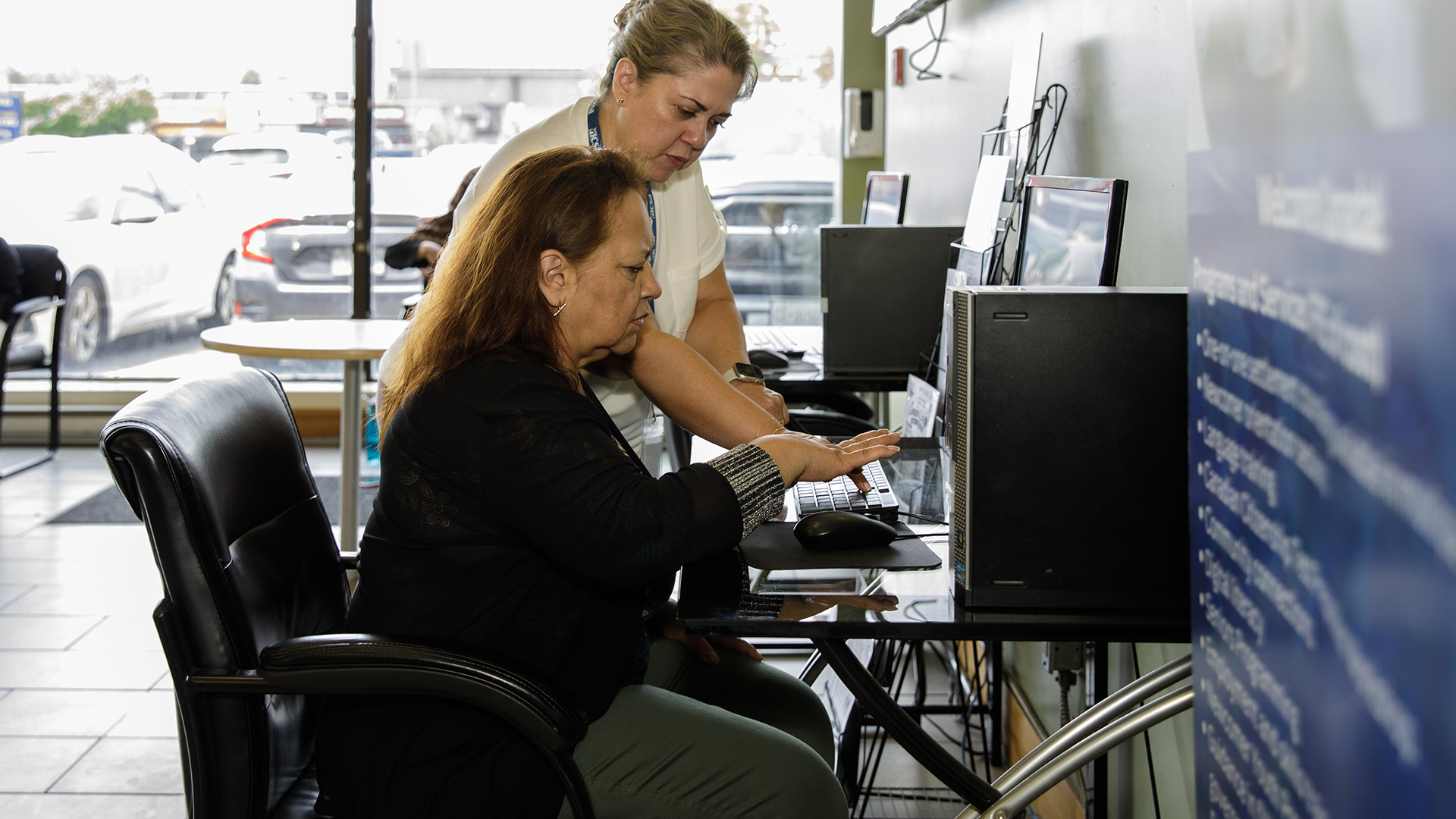
Where community continues to grow
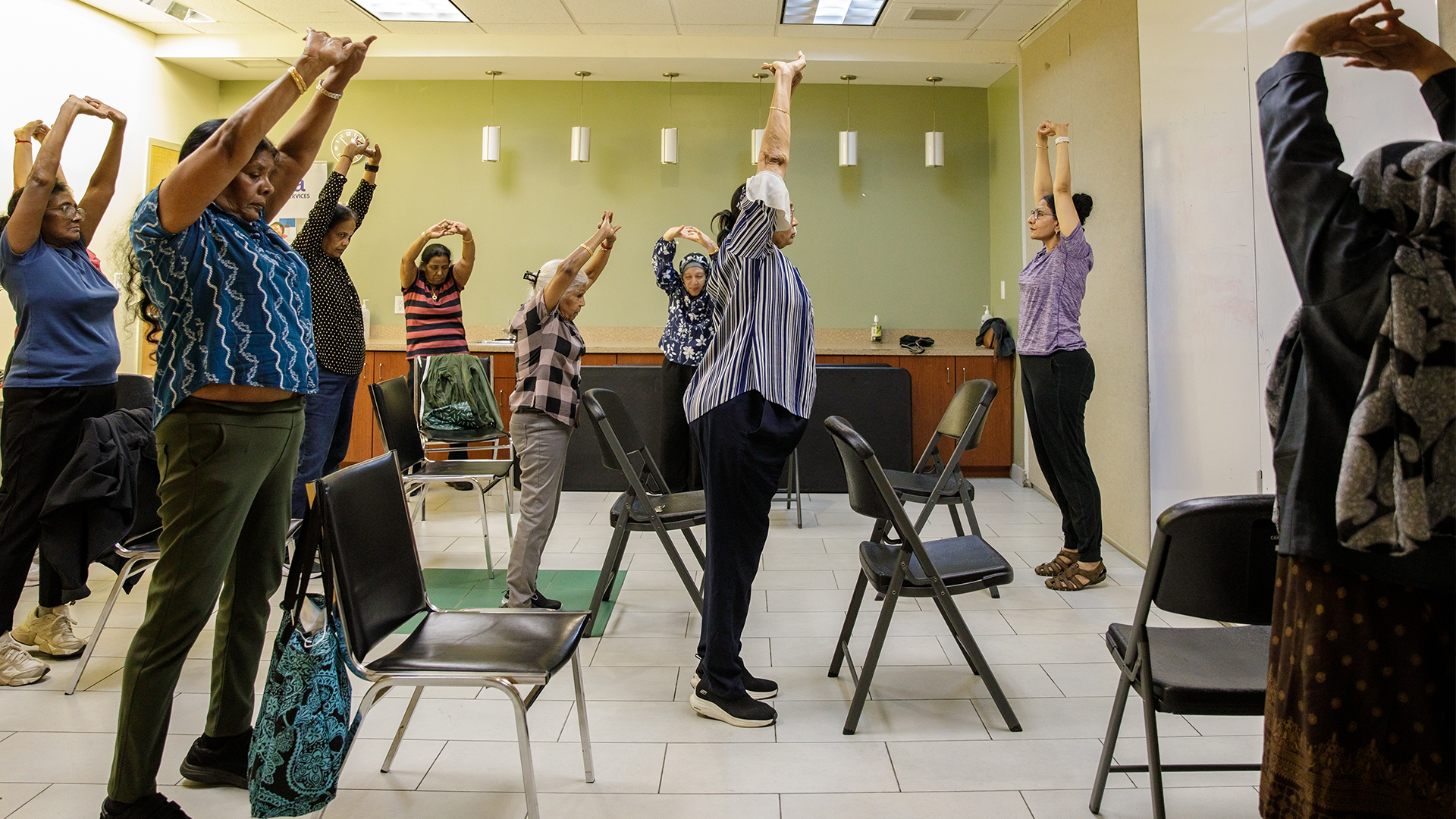
Back at the Dorset Park Community Hub, the day continues. A volunteer helps set up chairs for the next program. A few seniors gather together chatting before a yoga class. Someone stops in just to say hello. A new resident leaves with groceries, information, and a few new connections.
These moments may seem small on their own, but together they tell a bigger story about what community support can look like when it is rooted in place, relationships and trust.
And for many residents, it feels like something even more important: a second home.