United Way is helping people access food, community and the support they need to thrive
Sometimes, it’s the small things — like picking up new art supplies or taking a quiet moment to sit and create — that can show how far you’ve come. For Ted, such simple pleasures were once out of reach.
Growing up in a family that was never well off, Ted learned early how unstable life could feel. As a child, he began drinking; by early adulthood, he was struggling with opioid addiction. Over the years, making ends meet felt harder with each setback. At one point, he found himself sleeping beside the fridge in a cramped one-bedroom apartment alongside eight other people, privacy nonexistent.
It wasn’t long before he ended up living on the street with no idea what would come next. But today, Ted is over five years clean and living in stable housing.
He’s rebuilt his life around routine and purpose, finding joy in photography, art and stand-up comedy, and comfort in time spent with his puppy, Kaz. Those anchors matter, especially in recovery.
For the past two years, Ted has also received weekly meals through M.I.N.D., a United Way–funded program that delivers free, nutritious, homemade food to people and families experiencing poverty.
“I joined the program because it helped cover meals,” Ted says. “I wasn’t always able to prioritize food, so having that taken care of made a big difference.”
Ted’s experience reflects a broader reality across the GTA. Rising costs of living and growing financial instability are pushing more people to the brink. Without meaningful, consistent support, many risk falling through the cracks.
Finding nourishment and belonging
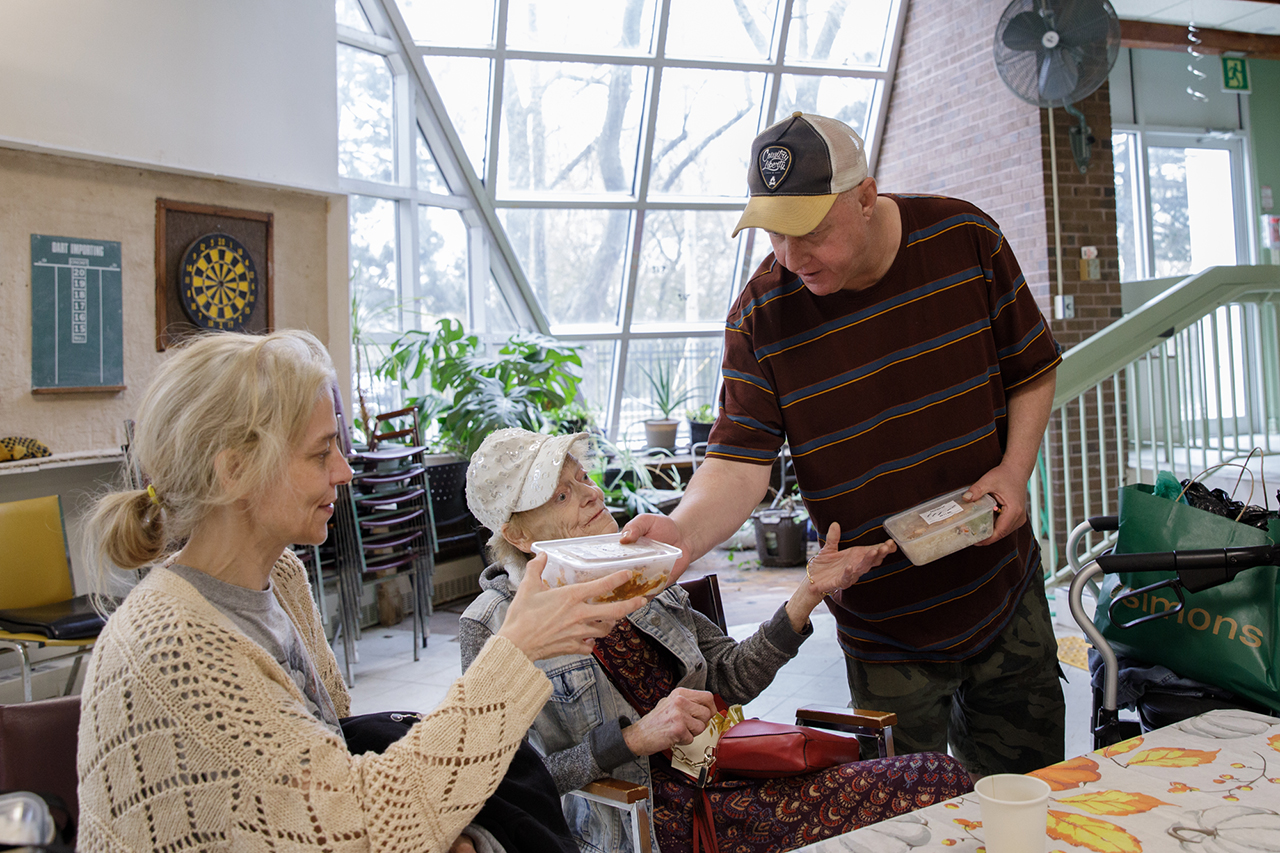
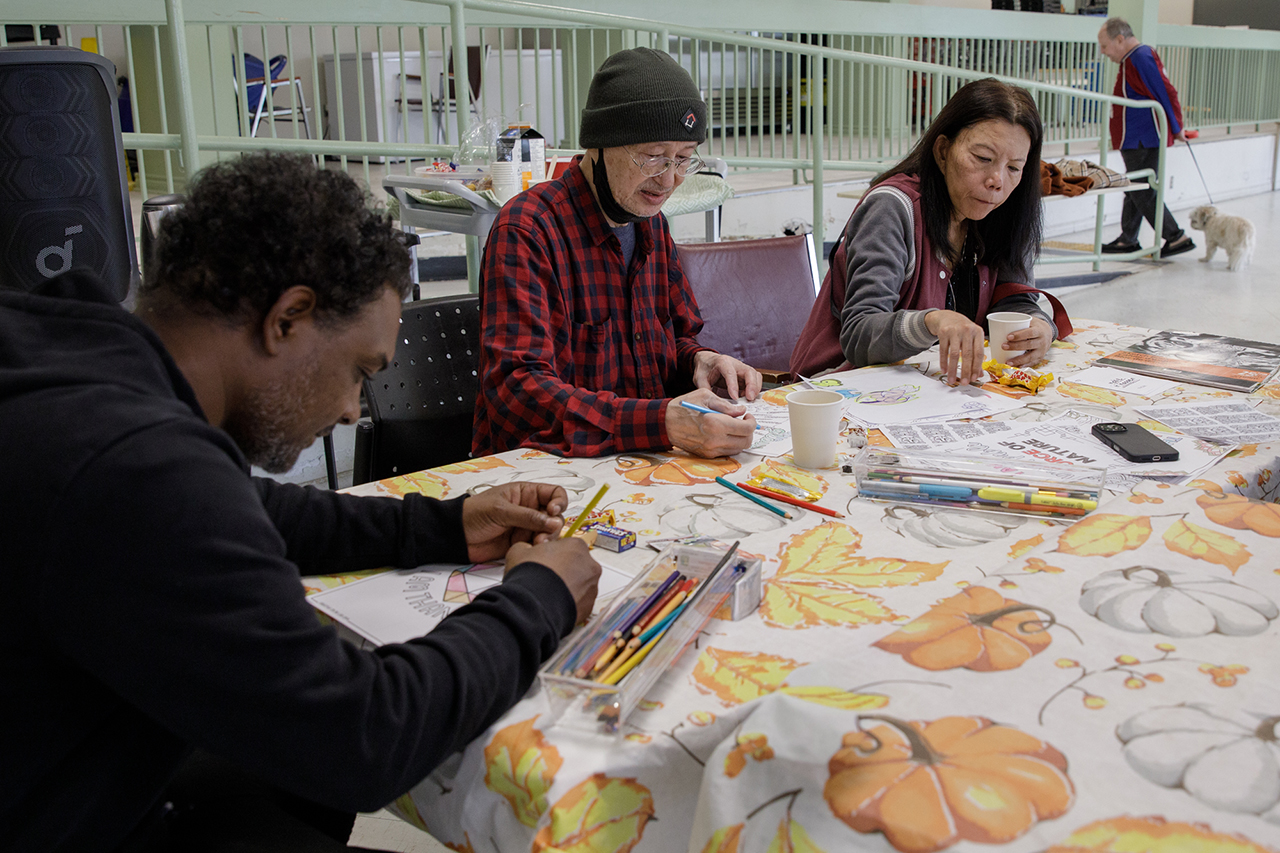
One of the first steps in Ted’s path toward stability was securing a safe place to live through Toronto Community Housing. It was there that he was also introduced to the M.I.N.D. program, which partners with local frontline organizations to bring healthy meals to low-income, at-risk and marginalized communities. At Ted’s building, the M.I.N.D. program partners with another United Way-funded agency, the Canadian Mental Health Association, which supports by handing out meals on site and offering art workshops, encouraging participants to stick around to practice mindfulness and seek connection with others.
It’s difficult to focus on recovery when basic needs aren’t met, yet many care providers don’t have the resources to offer meals. M.I.N.D. helps bridge that gap by ensuring people are nourished and supported. This allows partner organizations to deliver care more effectively while reducing barriers to recovery, housing stability and social inclusion.
“When someone is hungry, their body is stuck in survival mode,” explains Grace Chan, Executive Director of M.I.N.D. “Counseling is harder to absorb. Motivation to engage in recovery wanes. The excellent work our partners do can’t reach its full potential when clients are running on empty.”
For Ted, the impact of reliable meals was immediate. Food was brought directly to his building, easing a daily pressure he had lived with for years. Instead of spending time and energy searching for his next meal, he could count on it being there when he needed it and begin to think beyond survival.
With that burden lifted, Ted gained something he hadn’t had in a long time: the freedom to make choices for himself again — in ways that most people take for granted
“I get under $1,000 from ODSP, so the program helped me not just scrape through the month,” Ted explains. “For the first time, I could make small choices for myself again. I could go see a movie, do things I enjoy, which doesn’t happen often enough.”
Over time, Ted watched — and helped — the program evolve, offering suggestions for improvement like having tenants assist with operations. What started as a once-a-month pizza drop where people quietly grabbed food and left has grown into a weekly gathering that brings the building together.
Now, around 60 people attend regularly, enjoying many more meal options and a sense of community that simply didn’t exist before.
“The meals are good, and there’s always at least three things to pick from,” Ted says. “I like the turkey meal and their version of Chick-fil-A. People talk about that. It’s great!”
Healthy meals that feed more than hunger
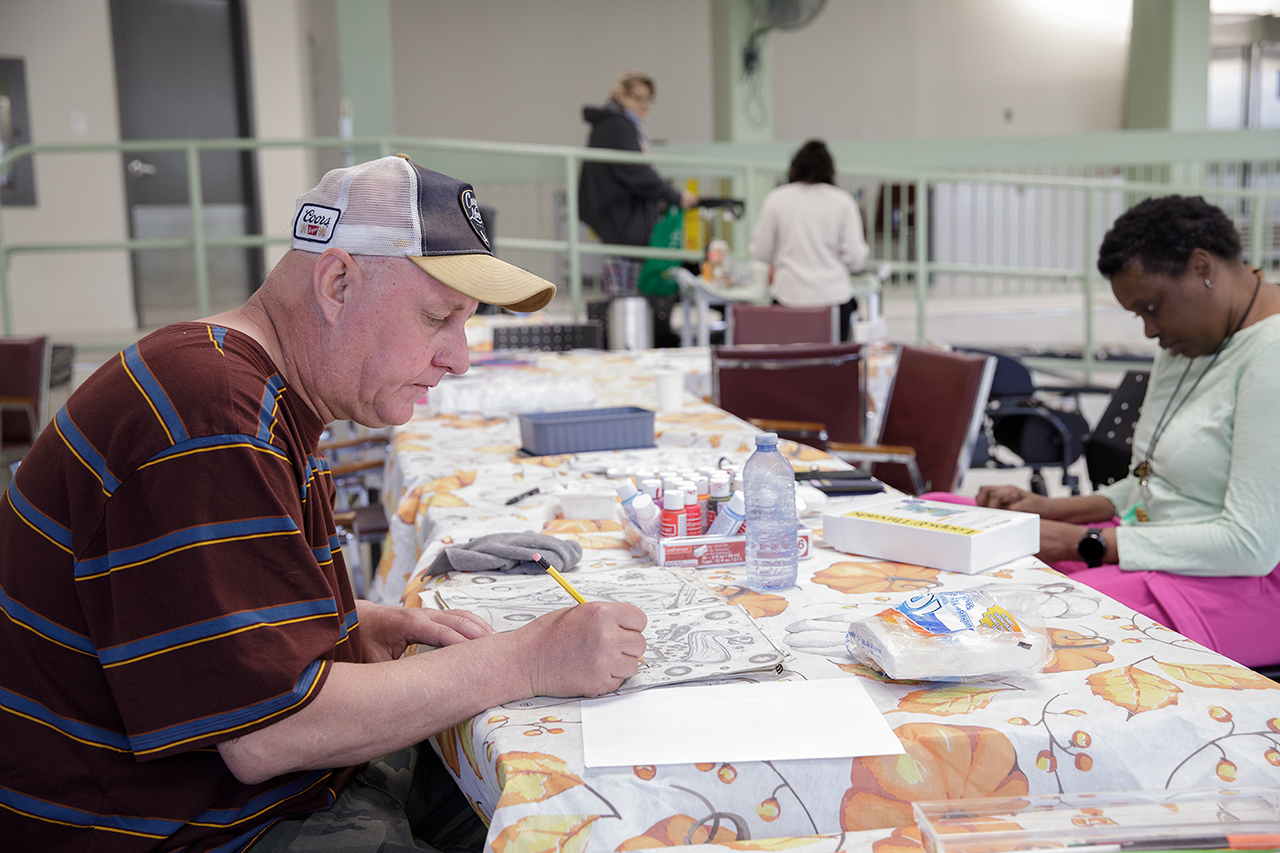
Beyond simply providing meals, the program has become a hub of belonging, support and joy for people in the building. By embedding food within a broader network of supports, the program reduces isolation, improves access to services and helps prevent people from cycling back into crisis.
“Our meals can be a doorway. Someone who might hesitate to walk into a service appointment will come in for a meal, and once they’re there, they make friends, overhear conversations, learn about other supports available. This may be the only place in someone’s week where they sit beside another person and feel seen,” explains Grace.
Ted notices that people show up even when food isn’t being served, drawn by the relationships that have formed around those meals. “It’s a time where people can build connections, talk to each other,” Ted says. “It’s even a little gossipy, like Coronation Street,” he adds with a laugh.
Support is woven naturally into the space. Counsellors offer practical help — from computer skills to resume guidance — all within an environment that feels welcoming and dignified.
“The program reaches people in a unique way. It’s proactive,” Ted says. “There’s a whole group of elderly people in my building who don’t always have company and this program gives them that community.”
Feeding people while fueling community
Everyone deserves access to food. That’s why United Way Greater Toronto supports initiatives that go beyond immediate relief, meeting urgent needs while strengthening long-term food security. By investing in meal delivery alongside culturally relevant cooking programs, community gardens, food literacy and wraparound supports, we help create conditions where people can build skills, stability and a sense of ownership around food. Last year alone, our 23 food programs helped 135,716 people across the GTA put meals on the table.
Programs like this one make stories like Ted’s possible — showing how food isn’t just about filling a plate, and how it can become a foundation for security, dignity and growth.
With a safe roof overhead, regular access to food and a supportive routine, Ted’s days now look different than they once did.
That stability has given him space to reconnect with creativity — an important part of his recovery.
“I just recently bought a sketchpad that I can connect to my computer so I can start doing my art digitally,” he shares. “I wouldn’t be able to do little things like that if food wasn’t taken care of.”
Ted’s journey has come full circle. Today, he volunteers at a food bank, sometimes even picking up items for neighbours in his building who can’t make the trip themselves.
“If they can’t get down there, I can help because I’ve gotten to know them more personally,” he explains. “We’ve built those relationships now.”
Looking ahead, Ted hopes to share his experiences more broadly through public speaking. “My nature is to make these things funny, as opposed to horrifying,” he says. “I’ve seen a lot of people talk about recovery with humour and humility. I’d like to do that.”
Ted’s story shows how having basic needs like food met can help people thrive — not just survive. Programs like these that United Way invests in don’t just feed people. They help people reclaim their lives, one meal, one connection and one opportunity at a time.