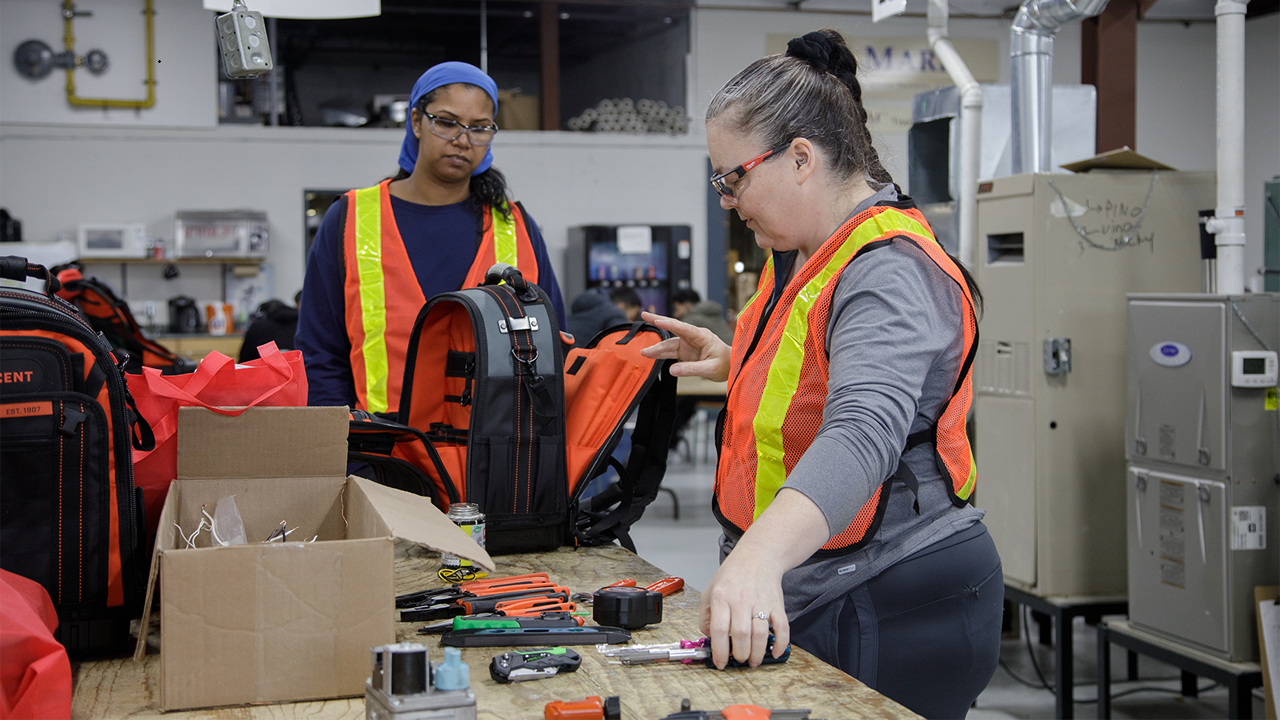
As labour shortages grow, United Way Greater Toronto is helping reshape access to an industry that has long excluded women.
After working on a cattle ranch out west, Ruth, a hardscape labourer, returned to Toronto ready to find work in construction.
But convincing employers she belonged there was another story.
“When I told employers about my experience, they would say, ‘A woman cattle rancher?’ and laugh at me,” Ruth recalls. “They wouldn’t give me a chance.”
Dismissive remarks like this reflect a troubling reality: gender bias is stubbornly ingrained in the skilled trades.
Ruth eventually became a sheet metal apprentice after graduating from the United Way-supported Labour Education Centre (LEC). But on many worksites, outnumbered by men, she can still feel isolated and underestimated.
Women make up just 8.3% of skilled trades workers in Canada. But the industry is at a turning point. As economic uncertainty and AI reshape many office and administrative jobs, more women are turning to the trades for well-paying careers untouched by automation.
At the same time, Canada is facing a labour shortage. Tens of thousands of trades jobs remain unfilled, and roughly 700,000 workers are expected to retire before 2028. Ontario alone needs 100,000 more construction workers to build 1.5 million homes over the next decade.
Women could help fill that gap. But after years of exclusion, the bigger question is whether the industry can make space for them.
That’s our mission. United Way Greater Toronto is helping more women access in-demand skilled trades careers by creating more inclusive pathways into the industry.
Supported to succeed
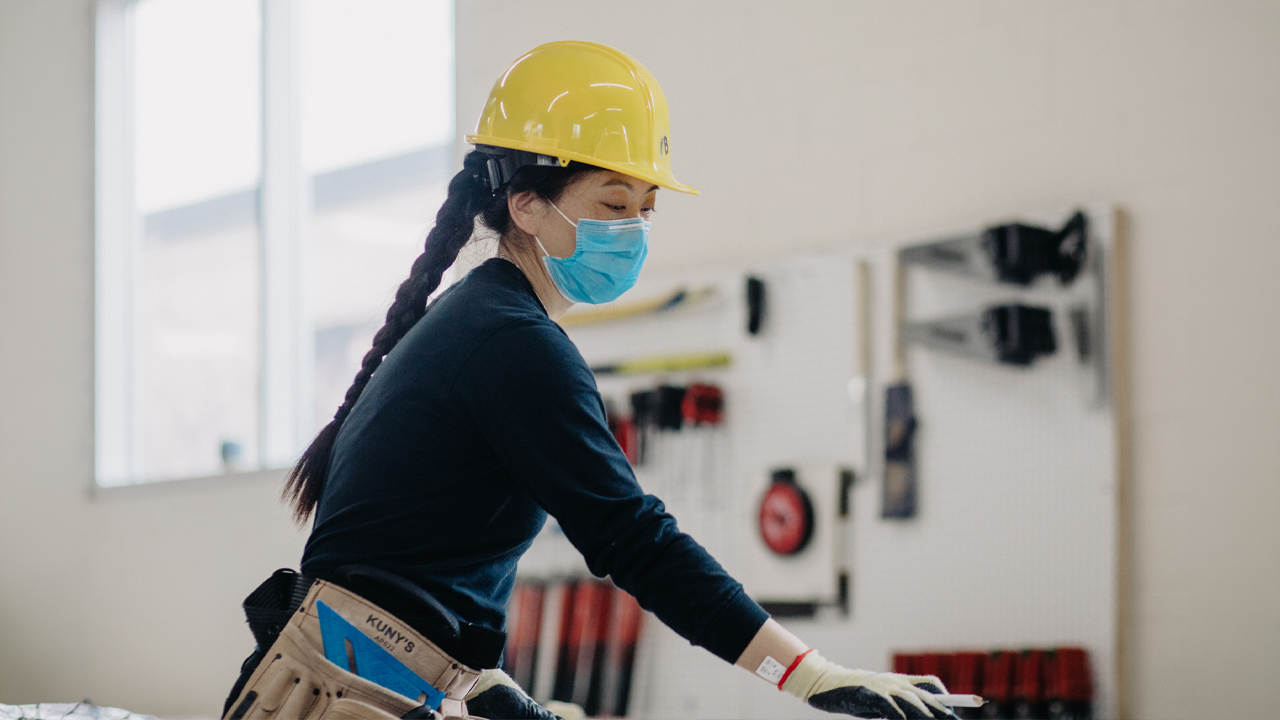
Already, United Way-funded employment agencies are helping women get their start in the trades.
More than 130 women have graduated from Building UP‘s United Way-funded pre-apprenticeship program, and 80% have moved into full-time trades jobs. Alongside hands-on training, the program offers one-on-one coaching and career guidance — support that made a big difference for Dorine.
On construction sites, Dorine was stung by dismissive jokes and excluded from jobs involving heavy lifting. As a newcomer to Canada, she didn’t have many peers to turn to for advice. But she did have her Building UP coach, who encouraged her to stay focused on her goal of becoming a millwright. When a job opportunity came up, Dorine’s career manager helped her put together a strong application.
“Building UP has been the pillar of my progression,” says Dorine, now a millwright apprentice at Ontario Power Generation with Aecon. “They supported me in the most difficult times.”
Staff at United Way-funded ACCES Employment have also helped address opportunity gaps for women through their Connecting to Careers in Construction training program. As part of this effort, they hosted an all-female employer panel and Speed Mentoring® event, enabling program participants to start building the professional networks that are often more accessible to men in the industry.
Finding childcare that aligns with demanding training and apprenticeship schedules is another barrier for women entering the trades. Miziwe Biik Aboriginal Employment and Training smashed that hurdle by building childcare directly into their Skilled Trade College program. With United Way funding, the organization opened a training institute with EarlyON childcare on-site. Women in the program can drop off their children and head a few floors down for carpentry and electrical training with local unions.
A foot in the door — and into a union
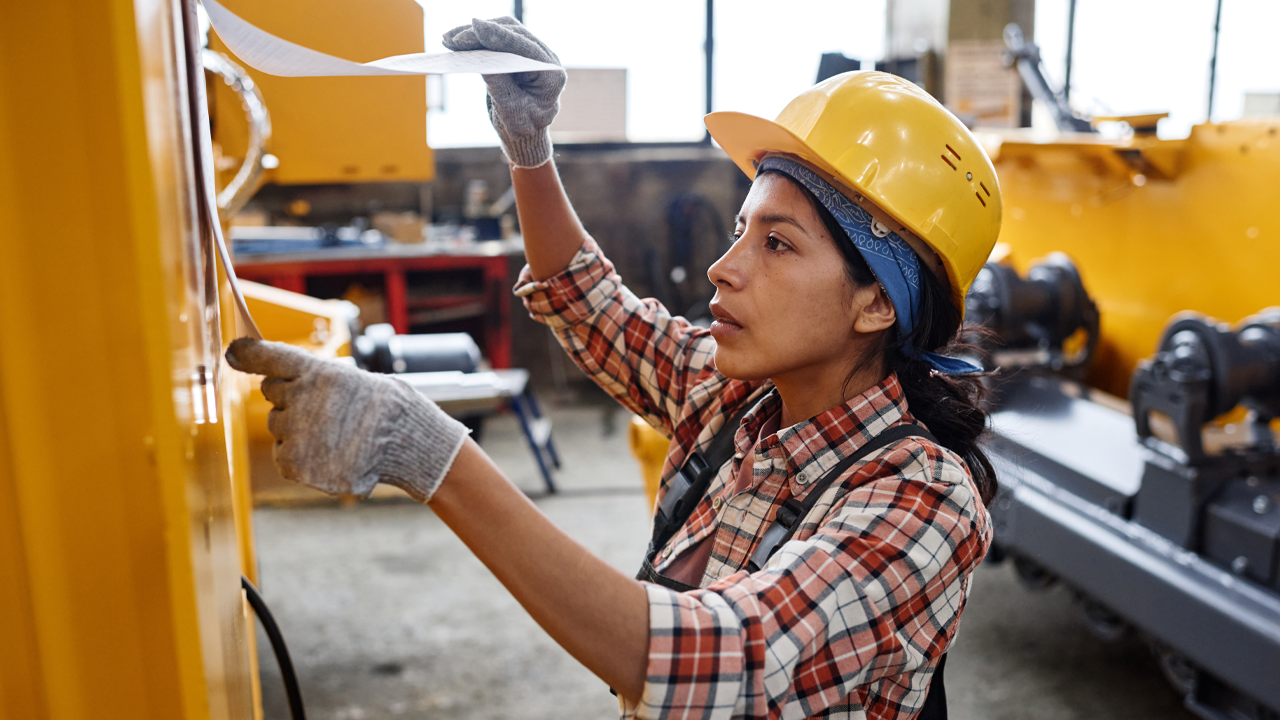
Getting a job in the trades isn’t as simple as applying online. Pathways to secure, well-paying work often come through union membership. But women often have less access to the networks and relationships that can help open doors to unions.
United Way responded by hosting a union open house in May 2024. We brought together union reps and participants from 12 United Way-funded employment agencies. By the end of the event, women from half those agencies had made connections with unions.
Our partners at the LEC work on union access, too. They organize union tours as part of their Women in Construction pre-apprenticeship program.
“In the job hunt, 90% is who you know,” says Hussein Jadavji, Assistant Executive Director at LEC. “Creating opportunities to be in those spaces and make connections is invaluable. It’s something that can help level the playing field.”
Ruth cherished those tours during her time at LEC. A visit to a welders’ union inspired her interest in the work she does today.
And the tours had another benefit: solidarity.
“We were a group of women surrounded by men,” Ruth remembers. “And we felt empowered to ask the hard questions about supports for women, parental leave, if there’s a women’s committee. You don’t get those answers over the phone. And being the only woman asking those questions would feel isolating.”
The most important tool on site? Each other
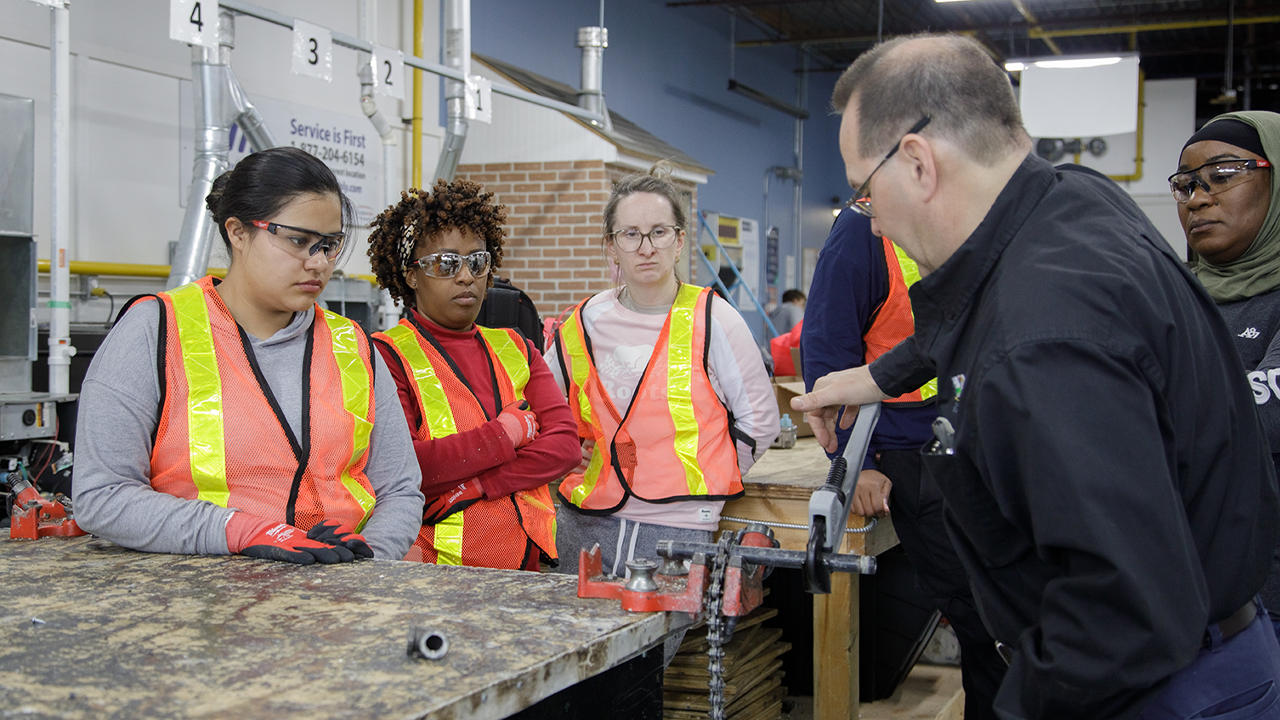
Having women to lean on helps with both breaking in and staying in the industry.
About 44% of women in the trades have considered leaving due to discrimination or a lack of respect and belonging. A supportive community can stave off that isolation and offer advice, encouragement and opportunities for professional growth.
“The women in the Women in Construction program built strong bonds with each other and their instructors,” says Hussein. “Long after the program ends, they’re still messaging each other, asking technical questions and getting advice on navigating workplace dynamics.”
Sometimes, that support comes from a mentor on the job.
Jennifer, the only woman in her cohort to graduate from another LEC program called Green Building Operator (GBO), knows what a difference that can make.
She was once rejected for a property management job because a male hiring manager doubted her ability to handle the work as a single mother. Shaken by the rejection and blatant sexism, Jennifer was reluctant when asked to come in for another interview. But when she did, she sat across from a female employee also balancing work and single parenthood. She hired Jennifer and became both a manager and mentor to her.
“She took a chance on me,” says Jennifer. “She noted my strengths, spotlighted my capabilities and gave me lots of chances to learn.”
Within a year, Jennifer earned her first promotion. Today, she mentors women coming through the GBO program that launched her own career.
United Way is looking to create more of these connections that are so critical for women’s success and retention in the trades. Through a burgeoning partnership with Ontario Building and Construction Tradeswomen (OBCT), we’re working to pair women in United Way employment programs with members of their mentor network.
“We’re delighted to be invited to OBCT’s next mentorship event,” says Anupma Sharma, United Way’s Manager of Community Investment, Inclusive Employment, who is spearheading the partnership. “We know how important it is to have female experts as role models, not just for career development, but for challenging outdated ideas about who belongs in the trades.”
Creating change from the inside
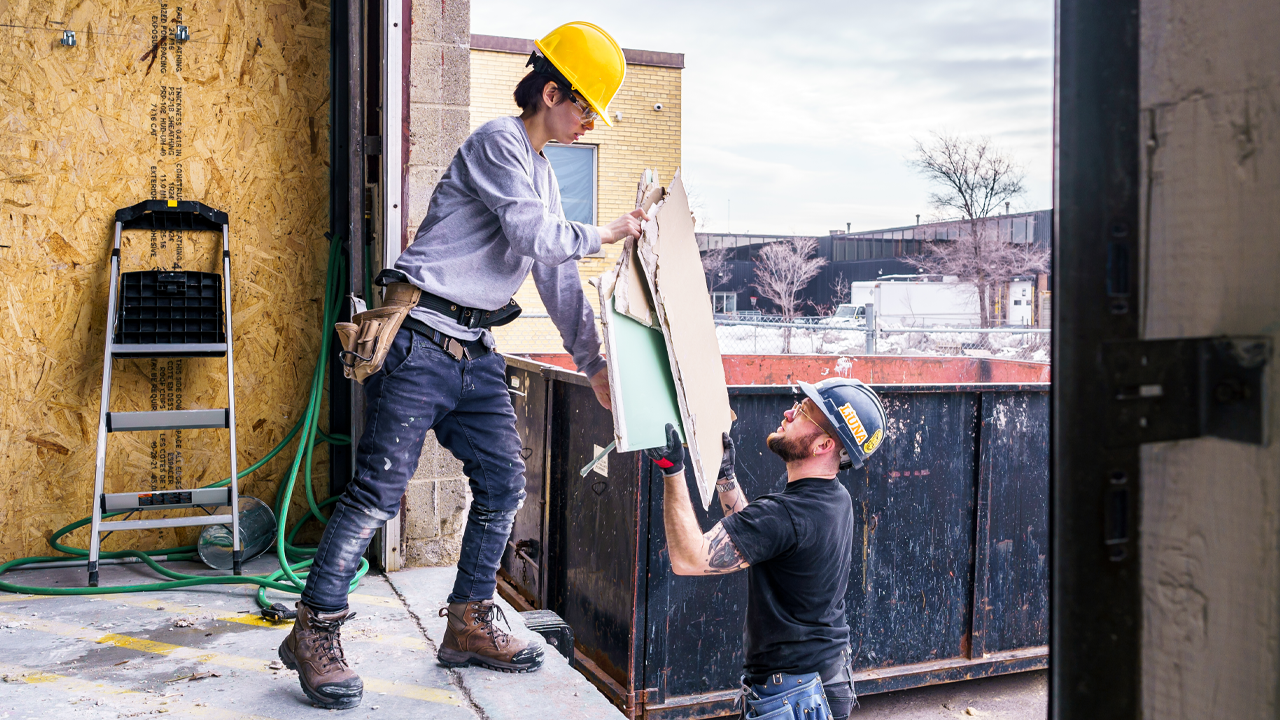
Women are motivated to embrace challenging careers in electrical, carpentry, plumbing and other trades. But until gender bias and discriminatory attitudes shift, an industry already strapped for workers will continue to miss out on talented candidates.
“Unfortunately, the number of ‘isms’ women face daily in the trades is not surprising,” says Anupma. “Sometimes, it can feel easier for women to leave than wait for things to improve. Addressing this issue is front and centre.”
For United Way Greater Toronto, that means investing in programs, training employers and bringing partners together on solutions that transform workplace culture. Better hiring practices, equity training, stronger responses to harassment and peer support systems are just the start.
Because women should have the same opportunity to pursue fulfilling careers in the trades — and workplaces where they can thrive.
“Women are capable of doing hard things,” says Ruth. “We just need more opportunities to explore these things and more visibility for the women trailblazing in the field.”