
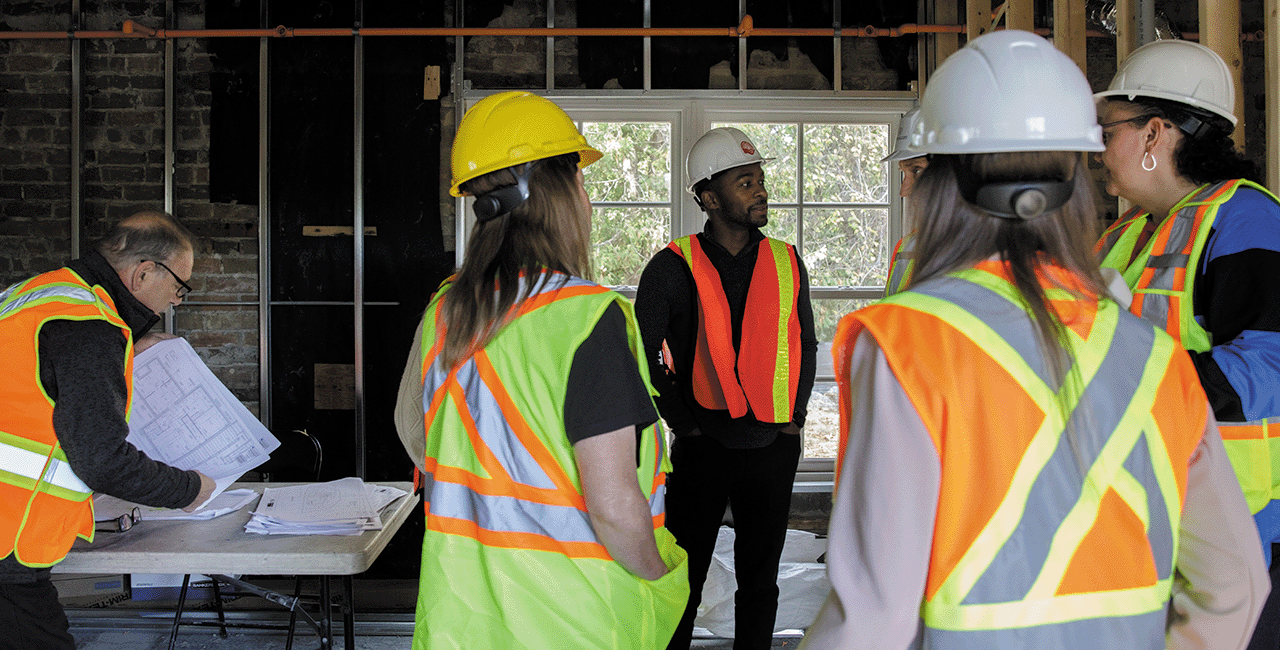
Photos by Daria Perevezentsev
UWGT program helps organizations find stability when it comes to real estate
It was on the 10th anniversary of College-Montrose Children’s Place (CMCP) being in its current location, in the Youngplace building on Shaw Street, that executive director Corina John received a letter with some shocking news.
The owner of the property was going into receivership and CMCP would have to either purchase the property or leave. “We were floored, and personally, I was terrified,” John said.
The non-profit organization, which provides family support, early education programs and spaces for families with kids six and under to play and learn, had established itself as the first purpose-built EarlyON centre in the city.
“As everything continues to gentrify, many organizations are being kicked out of their spaces and it’s really important to have spaces right where the families are; these social services are vital to the health of the community,” said John.
Having been in its 4,000-quare-foot and fully accessible space for a decade, the team thought the location would be permanent. Determined to keep CMCP where it was, John reached out to the United Way Greater Toronto (UWGT) and discovered that it was in the process of developing a social-purpose real estate initiative. CMCP quickly became the pilot organization for UWGT’s Community Real Estate Initiative.
Research conducted by the University of Toronto School of Cities, and commissioned by the UWGT, found that 70 per cent of community service agencies in the GTA that were part of the study lease their space, with costs rising as much as 57 per cent. That reality means organizations — like the CMCP — are being forced out of the neighbourhoods they serve by growing real estate costs.
“These agencies are treated like any other commercial tenant and they’re at the behest of the private market,” said Stefphon Nibbs, the director of community real estate with the UWGT. “As the GTA continues to grow and densify and intensify, and as real estate costs continue to increase for agencies, more and more of those dollars we invest into programming and services are going toward keeping the rent paid and keeping the lights on.”
With the research data, it became clear that focusing on creating stability, both in terms of location security and affordability, is critical for the long-term sustainability of these agencies, Nibbs said.
Launched in November 2024, the Community Real Estate Initiative’s first round of funding focused on supporting agencies who own or owned property or were in non-profit-owned spaces and wanted to expand their community services. With $2.125 million in grants, UWGT was able to support 13 projects across Toronto and York and Peel regions.
One of those projects was the construction of a soon-to-be-completed playground for the Polycultural Immigrant & Community Services’ Reception House location in Peel Region. The agency, which is a shelter and service hub for refugees and those seeking asylum, recently purchased the property.
With close to 45 per cent of its clients being refugee children, who it helps process trauma and integrate them into the community, Polycultural desperately needed a space for kids to play. The area does not have a public park or community centre, so building this space was critical, with a portion of Polycultural’s parking lot being given up for the playground.
“We have at least 50 to 60 children at the house and they have a lot of energy — and if you don’t have activities for them, they might put their energies into something else that’s not as good,” said Marwan Ismail, Polycultural’s executive director.
“Being able to run community service programs, you need the space for that. Grants are not usually available for real estate but for programming. But to run programs, you need the right space,” Ismail said. “This unique fund from the United Way helps different agencies in the not-for-profit sector create the space to run the right activities for vulnerable people in each community.”
The CMCP also received funding from the Community Real Estate Initiative. With $200,000 from the UWGT, along with additional grants, a mortgage loan and money from the community organization’s reserves, CMCP was able to purchase its Shaw Street property.
“Quite honestly, I don’t think we would have a space if it weren’t for the United Way,” John said. “It’s given us that stability — not only for operations, but for the families who rely on us. They know we are going to be here for them for the long term.”
Read more
December 02, 2025
Guiding United Way through the next decade
In this exclusive Q&A, Heather opens up about what drew her to the role of President and CEO and her vision for the next decade of impact across Peel, Toronto and York Region.
By directing federal funding locally and shaping policies rooted in community needs, United Way Centraide Canada helps all 57 United Ways, including ours, do more for a strong community services sector and a better GTA.
November 28, 2025
Building housing for the people who need it most
Our region’s housing outlook is bleak. With insights from United Way’s Built for Good report, this article breaks down how non-market housing works and what it will take to build the affordable homes people actually need.