
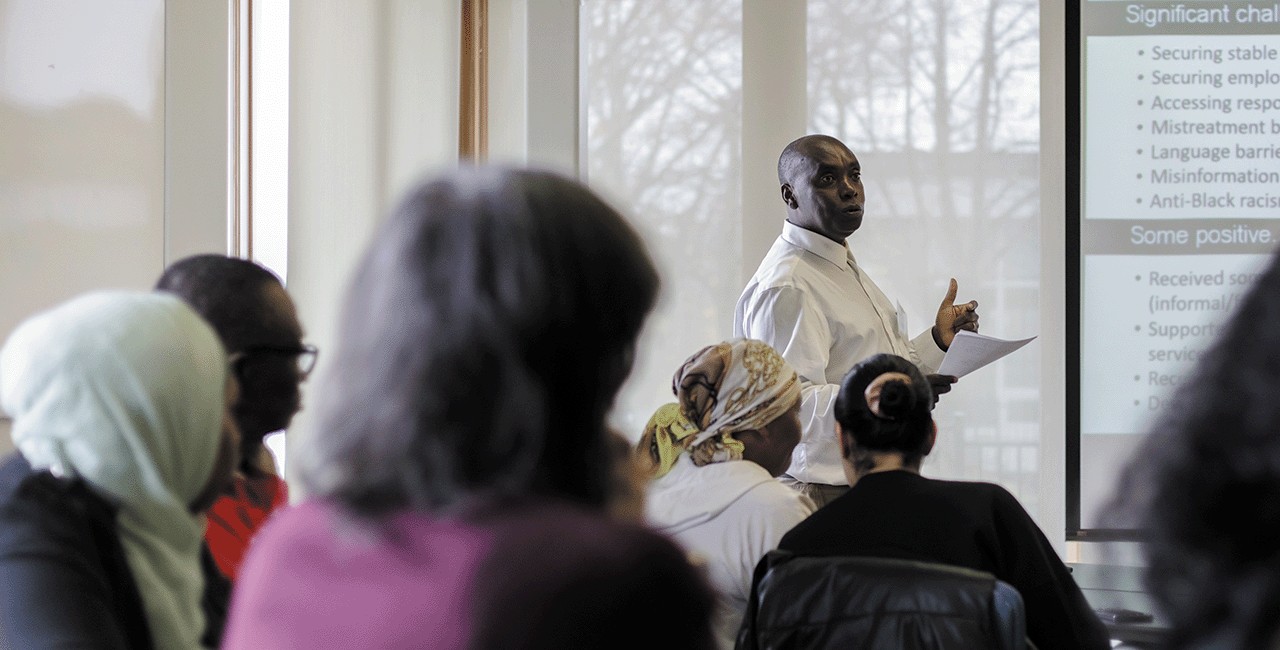
UWGT takes care of the immediate so it can then focus on how to apply those lessons in the future
When it comes to addressing emergencies that happen around Toronto, Peel and York, United Way Greater Toronto (UWGT) does everything that it can to help with a “quick” and “slow” approach.
“Through initiatives like our community hubs … we are able to build economic and social development in communities alongside local residents whose voices help to envision a positive future for their communities,” said Alex Dow, the director of neighbourhood solutions and strategies at UWGT.
Part of Dow’s work includes being involved in “cluster tables,” where UWGT works collaboratively with local government and the non-profit sector to stay abreast of changing needs in the community.
“We address those evolving needs by thinking and working creatively to find solutions. It is usually at these tables where the United Way hears more deeply about how a crisis is affecting residents.”
While UWGT started these tables during COVID-19, Dow said that their different stakeholders found that they were a valuable, ongoing forum that should continue to occur post-pandemic. Typically, UWGT will co-lead a cluster table with partners from local governments.
“This is where we hear what services, supports or challenges might arise, such as in the recent African asylum seekers settlement crisis,” Dow said.
The African asylum crisis occurred in 2023, when municipalities around the Greater Toronto Area saw a significant influx of asylum seekers from African countries. At the time, the GTA was already experiencing stretched social services, and the influx of asylum seekers became a crisis due to a shortage of available shelter beds. This led to hundreds of asylum seekers sleeping outside, which resulted in the tragic deaths of some individuals.
In reaction to what was taking place, a UWGT cluster table took a “quick” approach to address the immediate issues by working with different groups to assist the asylum seekers. Among those sitting at the table was Diane Walter, executive director of Margaret’s House and Community Support Services. The organization serves some of the GTA’s most vulnerable residents — individuals experiencing poverty, homelessness and complex mental and physical health challenges.
“Many individuals that we serve have been racialized, discriminated against, and disconnected from traditional supports,” said Walter. “Our work is grounded in anti-oppression, anti-racism, harm reduction, strengths based and trauma informed models.”
Margaret’s House was instrumental in transitioning the African asylum seekers from sleeping outside to being housed in churches in the community. It also collected critical data from the asylum seekers, — such as health information and country of origin — provided food, security and crisis intervention, housed some asylum seekers and referred them to community agencies.
Since the crisis, it has also opened Grant House for Asylum Seekers, congregate housing for women that includes a kinship model where women live in a family-like setting where they support each other every day. It also provides employment for asylum seekers at its drop-in services.
“The United Way learned of specific needs that impacted [the African asylum seeker] community and were able to provide specific supports to address the needs of such key groups who may benefit from tailored support,” Dow said.
After the immediate crisis was over, the UWGT created the Understanding the Experiences of African Asylum Seekers report, which took a “slow” approach to examining what occurred, how it could learn from what happened — what was done right or what could be improved — and how those lessons could be used to address future crises.
“This research — shaped by the lived experiences of asylum seekers — is helping us build a coordinated strategy to improve support systems and prevent future crises,” Nation Cheong, vice-president of community impact and mobilization at UWGT, said in a press release announcing the report’s findings in July.
Adaoma Patterson, the director of community investments at UWGT, worked on the report. Its results are another tool that can be shared with the approximately 300 agencies it invests in.
“We support the agencies not only through funding but also with knowledge and information that is relevant to being able to do their work successfully,” Patterson said.
Dow said the findings and recommendations of the report can be used by UWGT and its partner agencies and others to adjust, adapt and react to future crises, like heat emergency planning due to global warming.
“We have broken down silos and have mobilized quickly when a crisis happens,” Dow said. “We think that this can be helpful not only to communities but also to governments. We are ready to play our part in addressing crises.”
Read more
December 02, 2025
Guiding United Way through the next decade
In this exclusive Q&A, Heather opens up about what drew her to the role of President and CEO and her vision for the next decade of impact across Peel, Toronto and York Region.
By directing federal funding locally and shaping policies rooted in community needs, United Way Centraide Canada helps all 57 United Ways, including ours, do more for a strong community services sector and a better GTA.
November 28, 2025
Building housing for the people who need it most
Our region’s housing outlook is bleak. With insights from United Way’s Built for Good report, this article breaks down how non-market housing works and what it will take to build the affordable homes people actually need.