
How we’re fighting hunger at the roots as well as the table
The rent is paid. The lights are still on. The bills are covered. By every measure, you did what you were supposed to do. But when you tap your card at the grocery store, it declines.
This is the quiet reality of food insecurity — not a failure of effort, but the failure of a system that forces families to choose between basic needs and their next meal. Right now, one in four Toronto households is making that impossible choice.
Across the GTA, more and more families are turning to food banks. In 2024 alone, food banks in Toronto recorded 3.49 million visits. This record-breaking number is nearly one million more than the year before, a 273% increase compared to pre-pandemic levels.
But food insecurity isn’t just about what’s missing from someone’s plate. It’s about what’s missing from their life: adequate income, stable housing and systems that work together so people can get ahead, not just get by.
Hunger doesn’t wait. Neither do we.
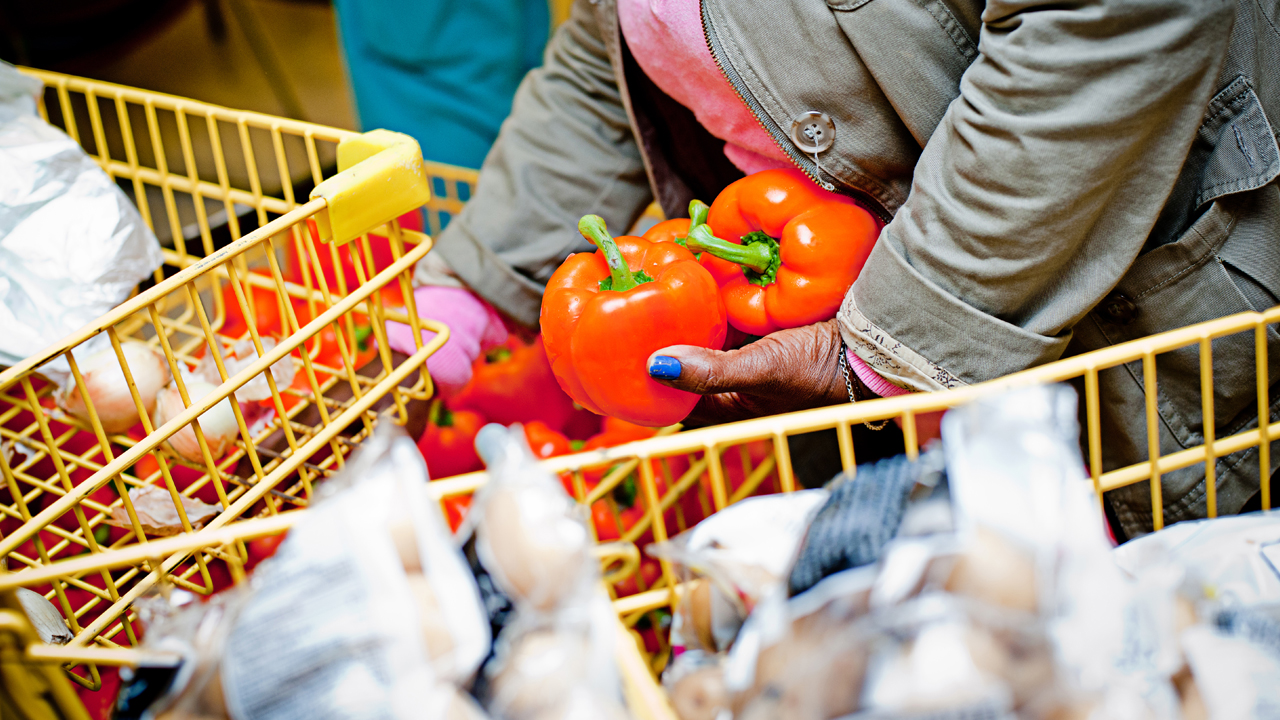
At United Way Greater Toronto, we believe everyone deserves reliable access to food. Every day, we work alongside community partners to meet urgent needs while tackling the deeper conditions that cause hunger in the first place. That means funding food programs and investing just as intentionally in research, advocacy and systems change.
Because the truth is this: food insecurity is only one piece of a much larger puzzle. Solving it means addressing poverty itself.
Beyond the numbers: Why we need to listen to people with lived experience
The numbers tell us how big the problem is — but they don’t show what’s it’s like to live it. To go to bed hungry. To ration meals. To make trade-offs no one should have to make.
That lived experience is where real solutions begin.
Our network of United Way-funded agencies works directly with people facing food insecurity every day. Their staff hear what data alone can’t reveal — and that insight shapes programs that respond to real life, not assumptions.
Malvern Family Resource Centre is one such agency, combining food access with community programming, local food systems and dignity-first design. Elliot Berthelet has seen this shift firsthand. “Kids were coming to our programs hungry and taking food home for their families,” says the centre’s Food Procurement Coordinator. “That led us to supply food in 100% of our in-person programs.”
To date, Malvern Family Resource Centre has served 154,000 meals and snacks — not as charity, but as a core community service.
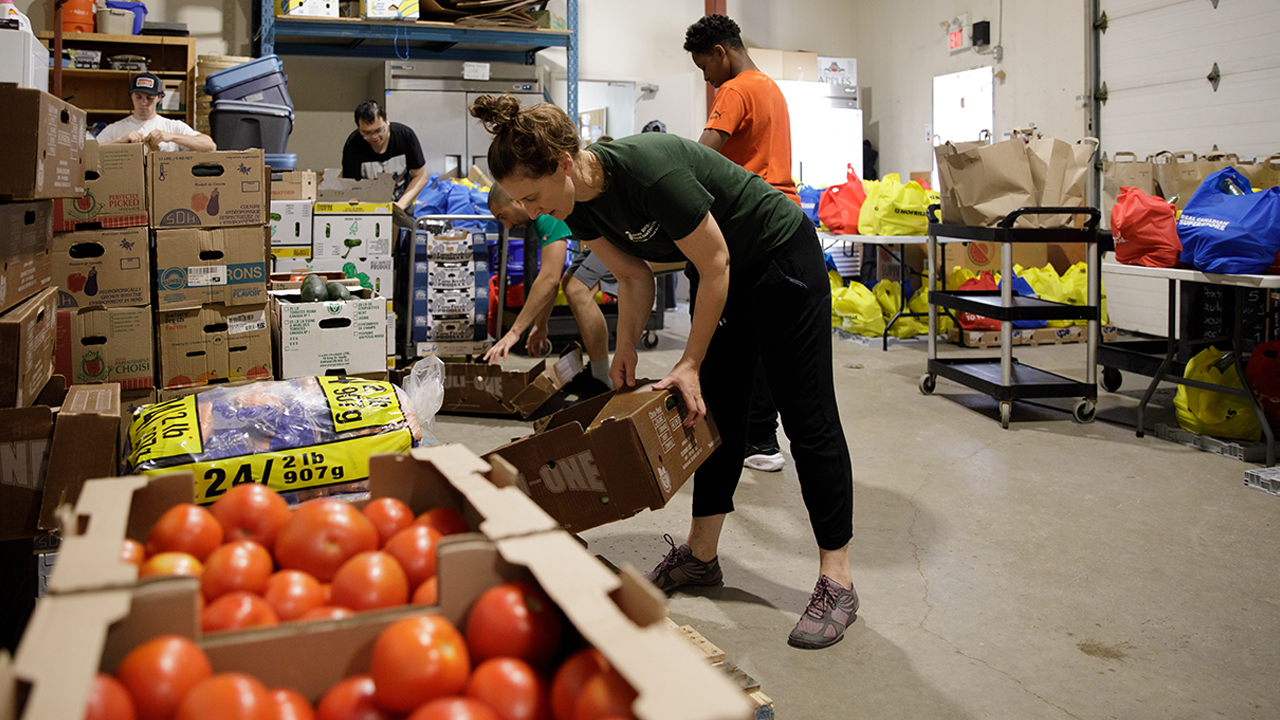
Listening is just the first step. Lasting impact comes from centering community voices in every decision.
At North York Harvest Food Bank, that principle guides everything from programming to advocacy. Director of Community Engagement Sarah Watson ensures decisions are informed by surveys, town halls, advisory groups and paid ambassadors sharing their lived experience.
“We rely on our community,” she says. “They’re the experts on what they need. It’s about building relationships and trust with the people we serve.” And those conversations point to a hard truth: even the most responsive food programs can’t fix food insecurity on their own. “There are no food solutions to food insecurity,” Sarah says. “People are food insecure because they are income insecure.”
Hunger is a symptom — poverty is the real crisis
Through her work, Sarah has noted how tightly food insecurity is tied to housing and income. Today, 20% of food bank clients spend 100% of their income on their housing.
“We need affordable housing, living wages, accessible health supports and assistance rates that meet basic needs,” she says.
Right now, the math simply doesn’t work.
Ontario Works provides $733 a month — a figure that would need to be tripled just to brush Ontario’s poverty line of $2,444. Meanwhile, 13% of North York Harvest Food Bank clients rely on the Ontario Disability Support Program, receiving about $1,400 a month, still far below the poverty line and what is needed to live with stability.
As living costs soar and housing remains out of reach for many, people already facing barriers are pushed further to the margins. Until incomes rise, living costs decrease and systems change, food insecurity will persist — no matter how many food programs exist.
Because poverty is the real reason people go hungry.
How community partners are reshaping local food support
Across the GTA, United Way-funded organizations are reimagining food access through cross-sector collaboration, innovation and shared infrastructure.
At North York Harvest Food Bank, the Food Reach program is transforming how organizations source food. The centralized purchasing and delivery system supplies high-quality, lower-cost food to food banks, schools and community centres citywide.
“By purchasing through Food Reach, organizations can increase the impact and the power of what they’re spending,” Sarah explains. “They’re also supporting local businesses and investing directly into communities, because 70% of Food Reach’s product is locally procured.”
Similarly, initiatives like Malvern Family Resource Centre’s Marketbucks program supports local growers while giving participants choice and control. Wooden tokens can be used at Malvern Urban Farmers’ Market to choose culturally relevant foods from local growers, no questions asked.
Dignity is central to this work. “We didn’t want anyone to have to justify accessing food,” Elliot says. “We make sure people can take what they need without speaking to staff by providing a 24/7 open access pantry and fridge, along with gift cards.” Food options are designed to meet dietary needs across the lifespan, from infants to seniors.
When food systems are built on collaboration, community, innovation and respect for choice, they work better and more fairly for everyone.
Racial inequities in food access
Food insecurity is not just about an empty plate — it’s about whose plates are empty.
In Toronto, 47% of Black households experience food insecurity and 76% of food bank clients are racialized. Even when income and education levels are the same, Black families are 3.56 times more likely to experience food insecurity.
Finding community-led solutions — and the research behind them
Food inequities in the GTA are deeply racialized, particularly in neighbourhoods like Jane and Finch, where Black residents face disproportionately high rates of poverty and food insecurity. Addressing these disparities requires solutions shaped by the communities most affected.
Sociologist Bernice Yanful, Assistant Professor at Toronto Metropolitan University, studies health equity within food systems and has worked alongside Black Creek Community Farm, a Black-led urban farm in the Jane and Finch community, to support locally driven responses.
During the height of the pandemic, the farm partnered with FoodShare Toronto to deliver fresh, locally grown produce to residents most in need. By August 2021, nearly 29,000 food boxes had been distributed — a powerful example of what community leadership can accomplish.
But while these initiatives show promise, more research is needed to understand which approaches create lasting change. “We know Black communities are disproportionately affected,” Bernice highlights. “What we know less about is which strategies are most effective.”
That question is at the heart of the Food as Medicine Demonstration Project, a partnership between Black Health Alliance, Afri-Can FoodBasket and researchers from Toronto Metropolitan University, Dalhousie University and the University of Toronto. “The ultimate goal was to inform an evidence-informed, culturally rooted food and nutrition intervention for Black people in Toronto,” Bernice says.
When hunger becomes a health crisis
Food insecurity is also a health issue.
Research shows strong links between food insecurity and chronic conditions like diabetes, heart disease, arthritis, oral health, depression, anxiety and more. Limited income often forces people toward less nourishing options, compounding risk over time.
“Chronic stress also plays a huge role,” Bernice reveals. “The constant stress of not knowing if there will be enough food takes a serious toll on people’s health.”
Food insecurity also intersects with disability. One third of food bank clients identify as having a long-term disability or illness. Physical, financial and systemic barriers — from inaccessible transit to lower incomes and higher living costs — make sufficient food harder to access.
Fighting hunger at the roots, not just at the table
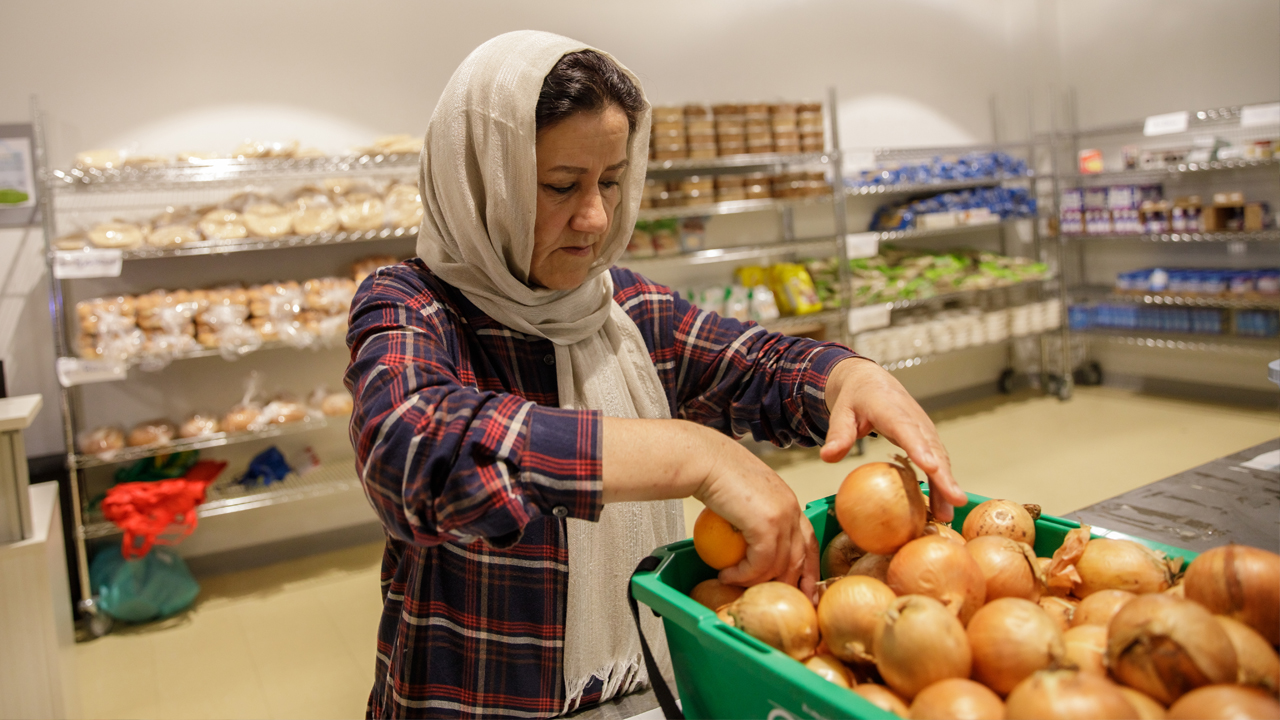
At United Way Greater Toronto, we’re committed to addressing food insecurity at the source.
Last year alone, we helped 135,716 people across the GTA access culturally relevant, local food by focusing on system-level solutions that tackle poverty head-on.
Through our network of partners and agencies like Malvern Family Resource Centre and North York Harvest Food Bank, we’re helping meet our neighbours’ most pressing needs while also building the foundation for long-term food security. From food literacy programs and community gardens to collective kitchens and innovative urban farming projects, these initiatives strengthen local food systems and restore agency around something as fundamental as a simple meal.
The impact is already visible across Peel, Toronto and York Region.
Our Community Hubs — one-stop shops for social services — anchor community grocery stores and food pantries close to home. Since opening, they’ve welcomed 4.5 million visits across 10 locations. Renovations and equipment upgrades to the Parkdale Community Food Bank’s new Hub are improving accessibility, expanding food storage and preparation capacity and creating a more welcoming space for clients, staff and volunteers.
“Food banks are a place to receive food and wraparound supports, but they also can become places of community building,” Sarah says. “They can become places of resistance. They can become places of joy.” Food security starts by listening to lived experience, by centering equity and by addressing the root cause: poverty.
Food is a right, not a privilege. And that’s why we’re doing whatever it takes to create a future where healthy, culturally meaningful food is never out of reach.